A product design brief set by Interstate Creative Partners, aiming to augment human habits. My concept is a smart home hub for Octopus Energy — the device controls light within your sleep environment, enables smart scheduling and links seamlessly to the application delivering metrics on sleep score and energy savings.
Figma, MidJourney
10 Weeks
Product Design


With the rise of technology in every room, our sleep environment is facing the risk of constant light being emitted — not by screens being on, but from devices sitting idle. Standby devices not only emit blue light that suppresses melatonin, delaying sleep onset, but are also costing users constantly. The challenge was designing a smart device that could improve the sleep environment itself, not just sleep behaviour — adding an extra layer of control to the wide range of standby devices likely present in any bedroom.


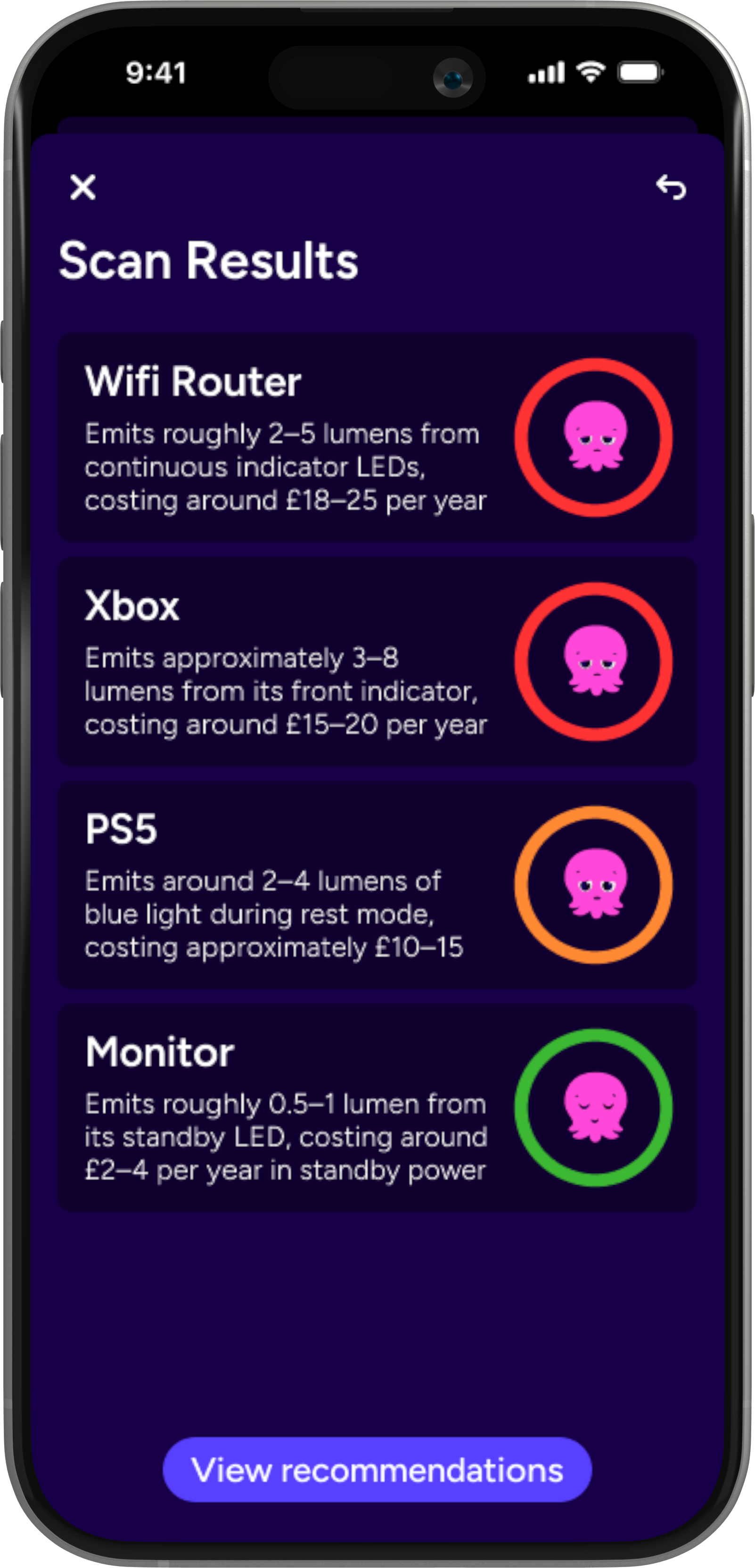
OctoSleep is a concept for Octopus Energy that monitors the user's sleep environment and suggests improvements — building out an evening wind-down routine and delivering metrics on sleep improvements and energy savings over time. Users add their devices and scan to find light source severity, then receive suggestions on what to include in their sleep schedule. When the schedule starts, OctoSleep switches off modern devices via WiFi and API integrations and controls traditional remote-controlled devices via RF signals.
You will find all the deliverables and all project files down there. Jump straight to them with the button below, or take it slow and scroll through my breakdown of the features.
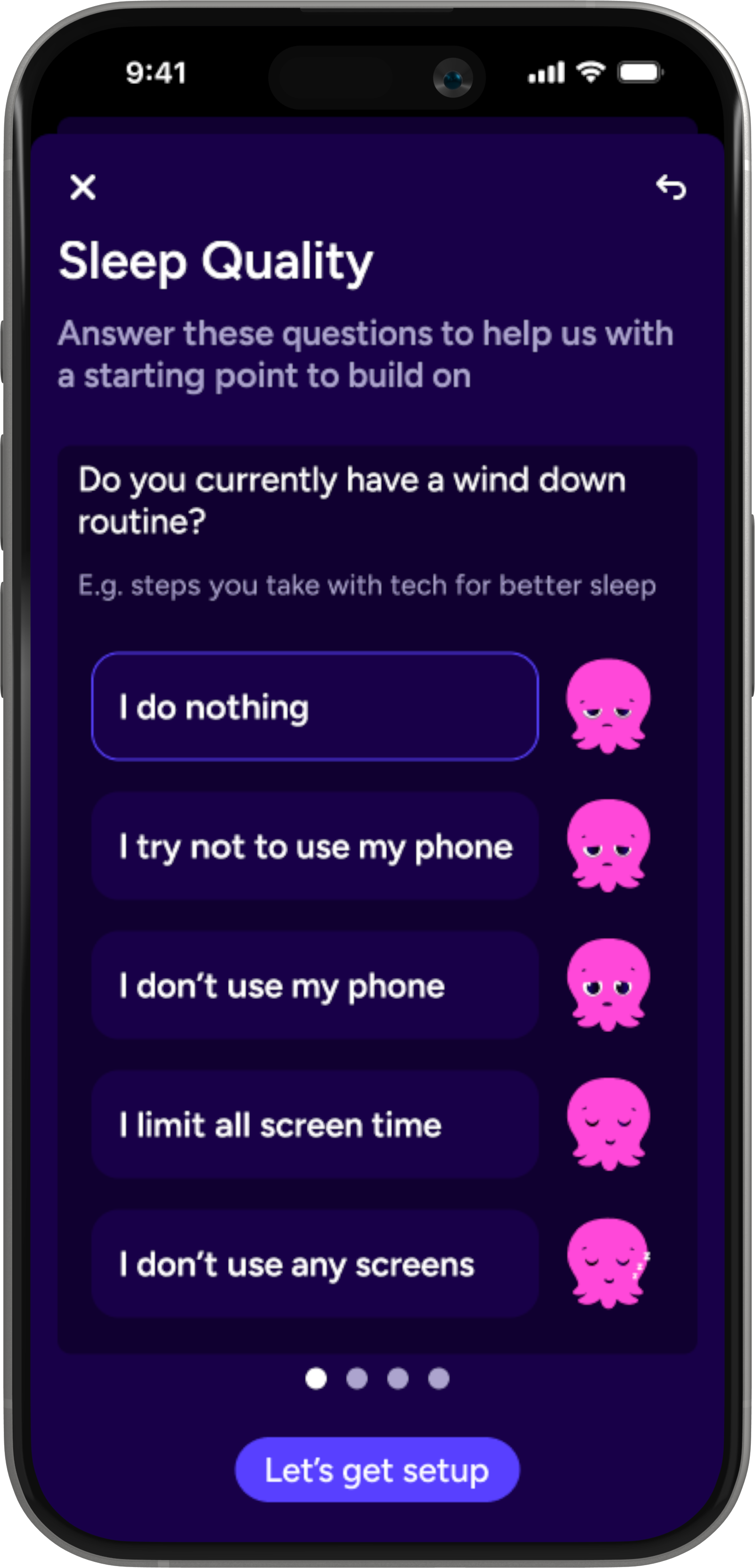
Existing within Octopus Energy's ecosystem, the OctoSleep device can be found alongside other devices they offer. The user first onboards via a simple sleep quality survey — without invasive personal questions, we gain a base level understanding of their sleep quality. This introduces the Constantine scale, a visual system used throughout the application to represent the severity of effect.
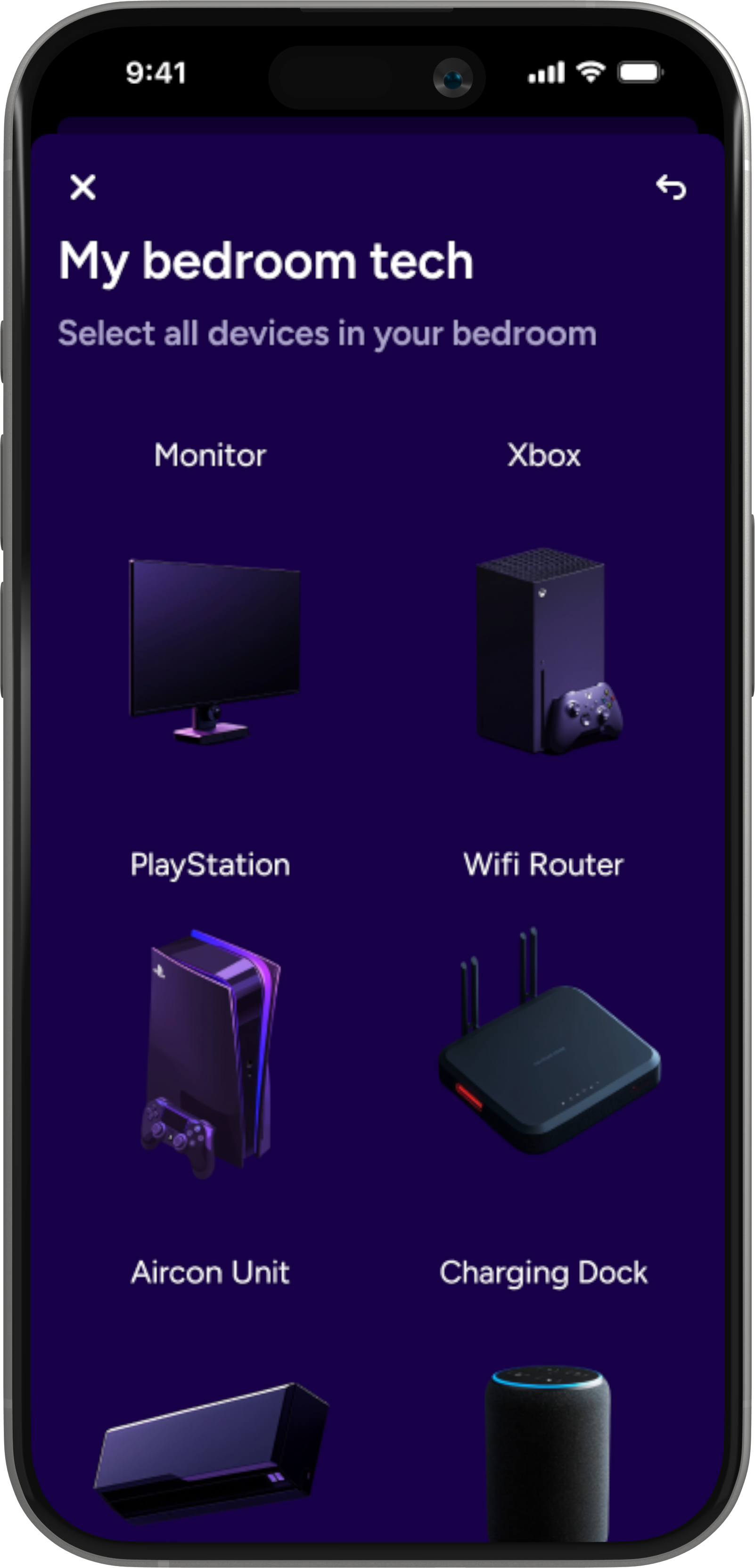
Common devices likely found in the user's sleep environment are displayed in a selectable grid. Upon selection, a carousel explains how each device affects both sleep quality and energy costs — highlighting that even a standby light can cost up to £25 per year.
Taking control of certain devices requires an extra level of connection. By utilising APIs, we can control devices such as the Xbox Series X or PS5. Understanding that users may want to experience the device first hand, making this step skippable was important for freedom of navigation.
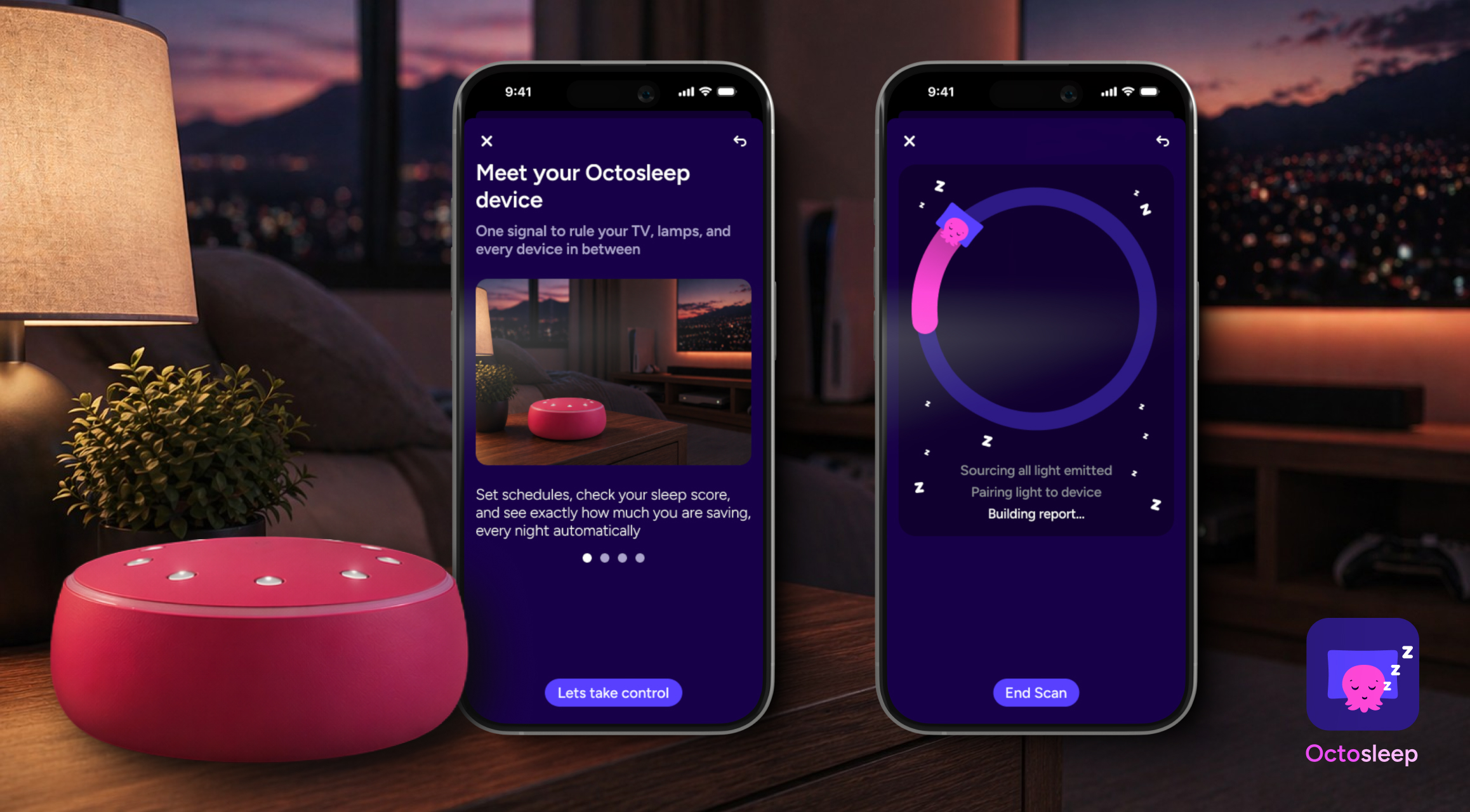
The user now understands how the devices they added can be controlled, showing the true value of the OctoSleep hub. Making the call to action inactive until the user has scrolled through the carousel was a conscious decision to ensure they fully understand its capabilities.
The device conducts a scan to detect light sources and pair its position with the devices selected during onboarding. The interface captures Octopus Energy's playful aesthetic while still communicating system status and scan progress. An option to end the scan early ensures the user is never left without freedom of navigation.
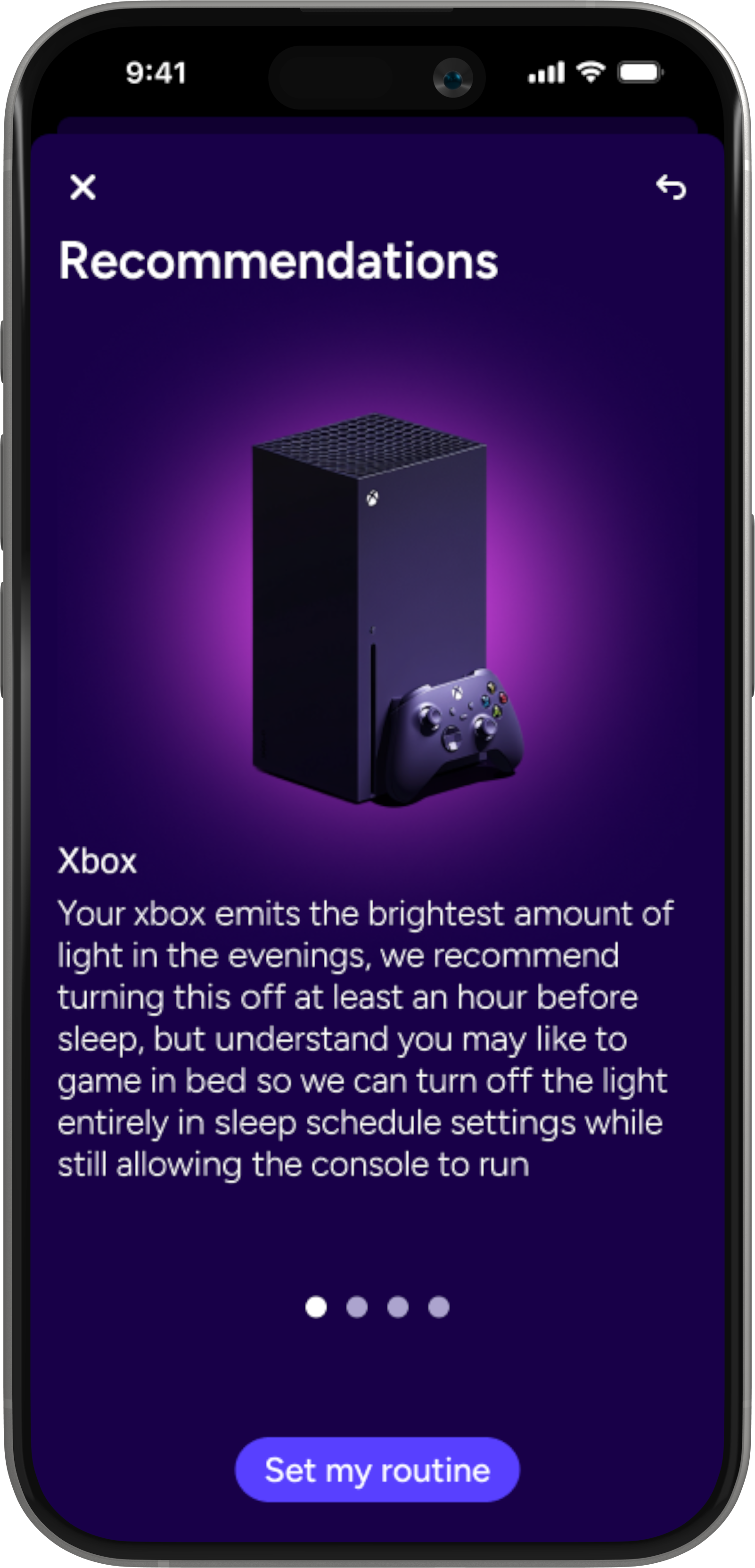
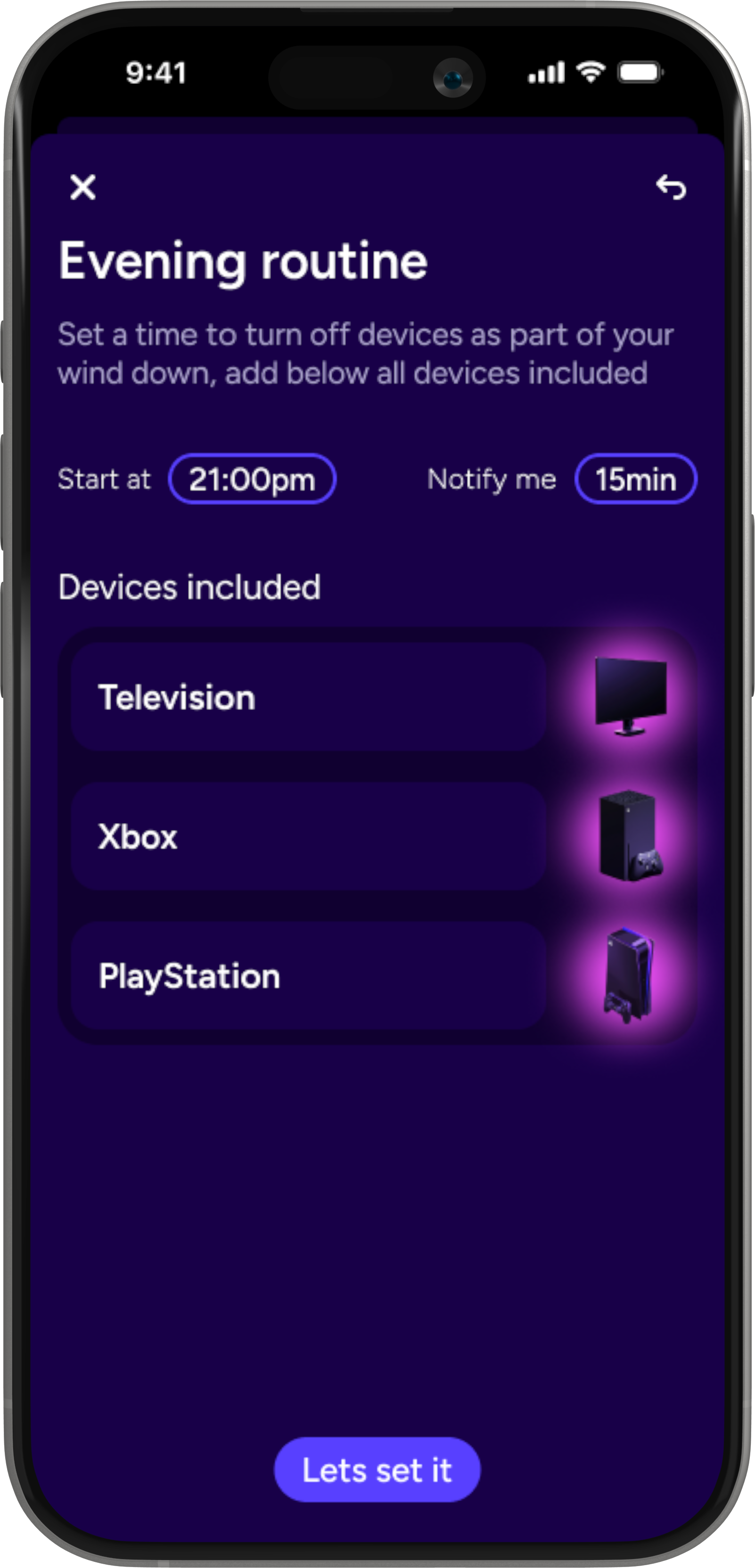
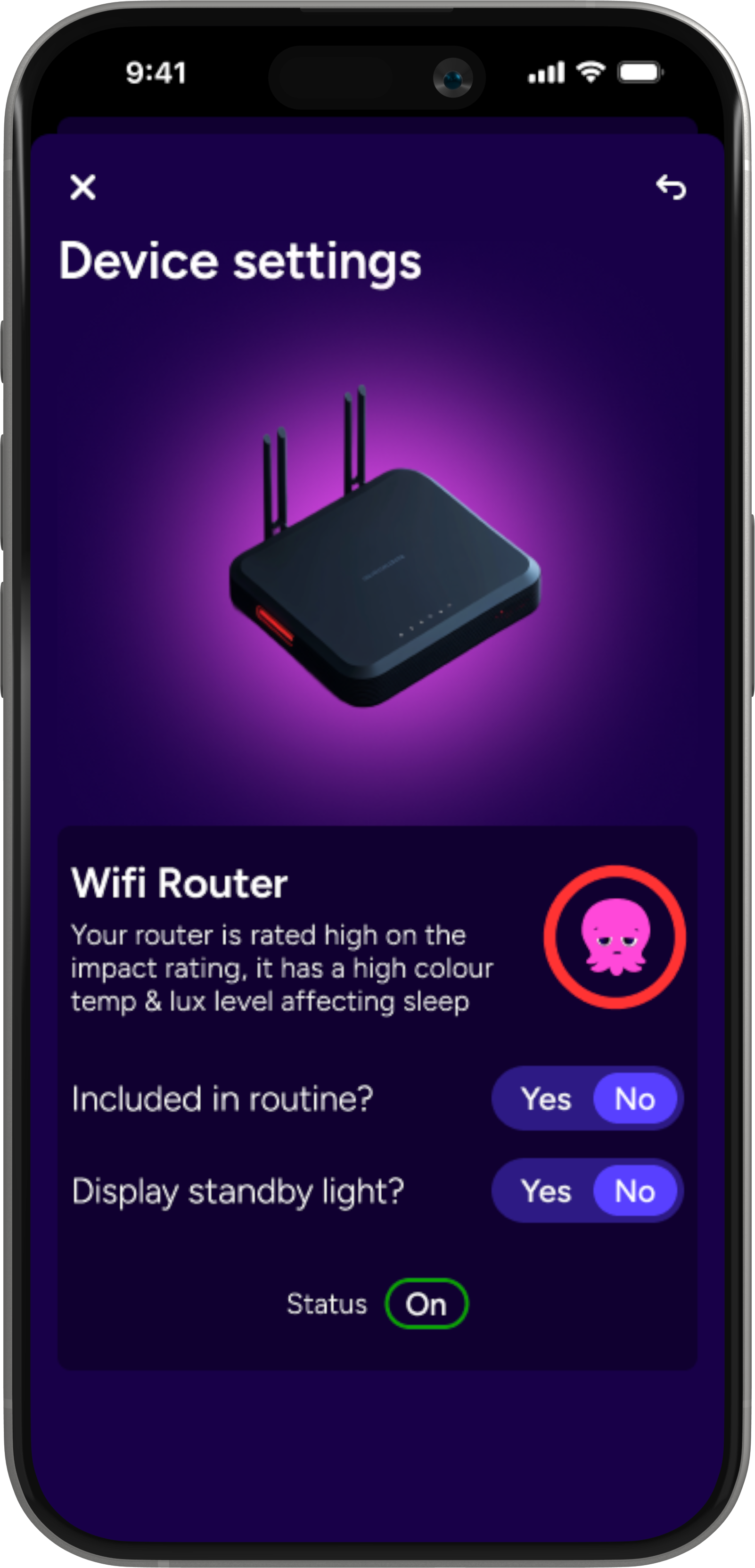
Recommendations are a key part of the process, suggesting best practice while automating where possible. Not all devices should be switched off fully — a good example is the Wi-Fi router, which cannot be turned off but users are instead guided to remove the standby lights in device settings. The remaining devices are added into a routine, which includes a wind-down time and a notification sent before it begins.
The dashboard displays the user's sleep score, a percentage based on movement during the night detected by the hub. A modal controller lets them switch to an energy metric, showing how much they have saved since using OctoSleep. Device settings allow control beyond schedules, such as removing standby lights altogether while retaining key device signifiers in one place.
Explore the iframe below, use the filters panel to choose from the design file, prototype, research board or presentation
I'd love to hear from you! Whether it be a question, a project idea, or just want to say hello, feel free to reach out using the form.